Metadata and artwork from TMDB. Not endorsed or certified by TMDB.
psychological
2025 · R · 1h 48m
The task is simple: walk or die.
It's not a race. There's no finish line. Just the road, and the boots, and the slow erosion of everything you were.
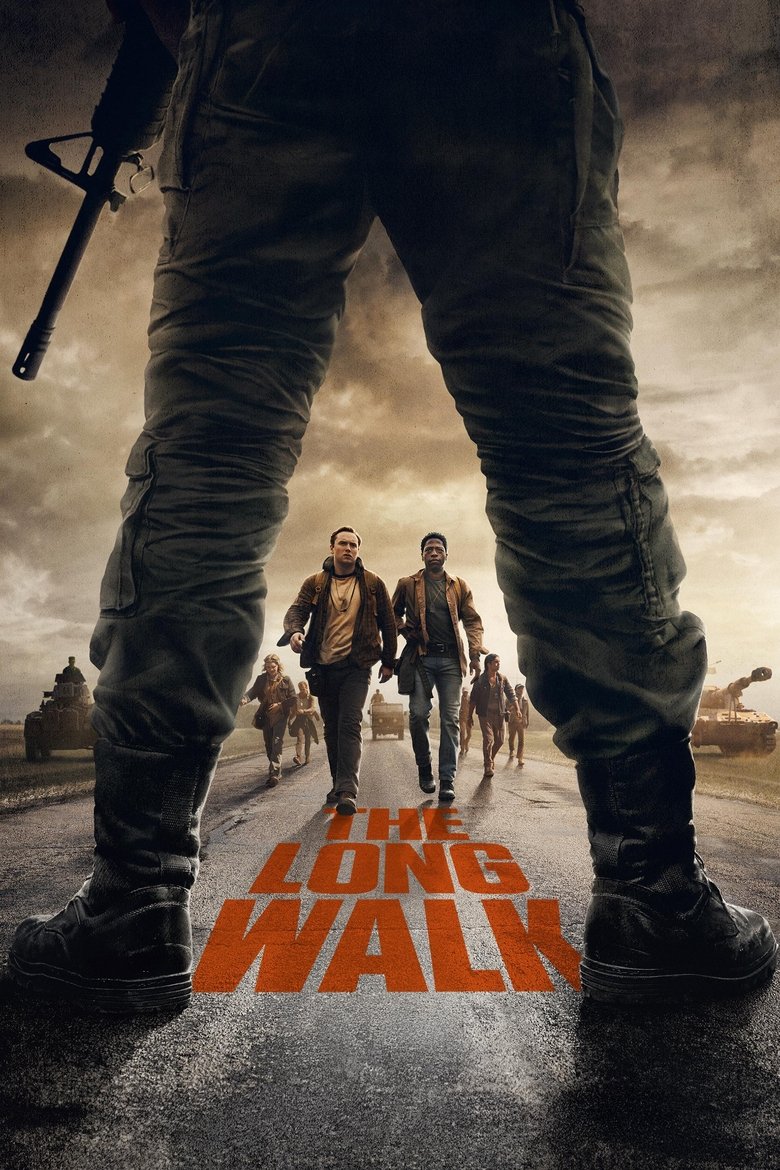
The Long Walk is Francis Lawrence's adaptation of Stephen King's 1979 dystopian novel, set in an alternate America where the government's most beloved spectacle is a brutal annual contest: one hundred teenage boys walk south from the Maine border, and any boy who drops below four miles per hour receives a warning — three warnings and soldiers execute him on the spot. The last boy walking wins everything. Cooper Hoffman stars as Garraty, a Maine teenager who enters the Walk and finds it transforming him in ways he cannot stop or understand. It is a film about endurance, about what societies demand of their young, and about how long a person can remain themselves when everything is stripped away.
Tags
Based on 2 ratings
6.2
Overall
In an alternate, militarized United States, a totalitarian regime holds an annual spectacle called The Long Walk. Fifty boys — one from each state, technically volunteers, though social and economic pressure makes refusal nearly impossible — must walk hundreds of miles along rural highways under constant military escort. The rule is simple: maintain at least three miles per hour, or receive a warning. Three warnings means a soldier shoots you on the spot. The Walk ends when one boy remains. The winner receives a cash prize and any wish the regime can grant. The event is nationally televised, presented as patriotic ritual and entertainment, normalizing lethal cruelty as spectacle.
Raymond "Ray" Garraty is the Maine Walker — ordinary, thoughtful, our way in. He enters partly out of economic desperation and partly because this society has made the Walk the only recognized path to heroism for boys like him. Around him forms a loose core group: Peter McVries, cynical and sharp; Baker, quietly principled; Hank Olson; Stebbins, composed and oddly distant. At the starting line they still joke and posture. The Major — a smirking military figurehead played by Mark Hamill — fires the starting gun: "Walk until only one of you remains."
The early miles strip away bravado fast. The first executions shock Ray and the others — soldiers calmly shooting teenagers in front of cheering roadside crowds. As hundreds of miles accumulate, the film moves through marked milestones, each one measuring not just distance but the deterioration of bodies and minds. Ray, McVries, Baker, and the others develop a trench-warfare camaraderie: sharing jokes and stories to stay sane, talking about what they'd wish for if they won, sometimes physically supporting one another at the risk of earning warnings themselves. McVries challenges Ray constantly, pushing him to think beyond revenge and toward something more humane.
Deaths come steadily. Hank Olson, near mile 201, walks calmly toward the soldiers when he knows he's finished. Baker tries to run to him and nearly earns his own execution before Ray drags him back. Pearson's body simply gives out — no rage, no plea, just collapse and a gunshot. At mile 324, Baker's nosebleed worsens and he knows it's over. He hands Ray his locket for his grandmother, asks his friends not to look back, and breaks away. They hear the shots. They keep walking.
At mile 286 the Walk passes through Ray's hometown. His boots are destroyed. He sees his mother at the roadside and breaks — runs toward her, sobbing, earning warnings from soldiers who raise their rifles. McVries grabs him and forces him back into the Walk, saving his life and tearing him from his mother in the same motion. It is the film's emotional peak: the human need for contact nearly kills him, and surviving it costs something irreplaceable.
As the numbers dwindle to a handful, Stebbins reveals to Ray that he is connected by blood to the regime's leadership — a secret he believed might grant him some reprieve. The Walk does not care. Stebbins collapses from heart failure in the later miles and is executed. The system consumes even its own. McVries, spiritually exhausted and unwilling to be the last man standing at the cost of his soul, stops resisting the inevitable. In a quiet, devastating moment, he lets himself fall behind. Ray hears the shots. He keeps walking.
Ray is the last Walker. The soldiers announce his victory. The Major steps forward. But Ray is no longer present in any coherent sense — staggering on destroyed feet, barely conscious, hearing the voices of McVries and Baker and his mother in the crowd noise. When asked for his wish, he doesn't answer. He keeps walking.
The film ends on a figure ahead of Ray on the road — someone who looks like one of his fallen friends. He smiles faintly and walks toward it into a bright, hazy distance. The crowd and soldiers fade. Only wind and footsteps remain. Whether Ray dies on the road, his mind conjuring a final hallucination, or survives physically while remaining lost inside the endless walk, the film refuses to separate the two outcomes. In a system this cruel, there is no real winning — only different flavors of loss.
More Like This
Reviews
No reviews yet. Be the first.