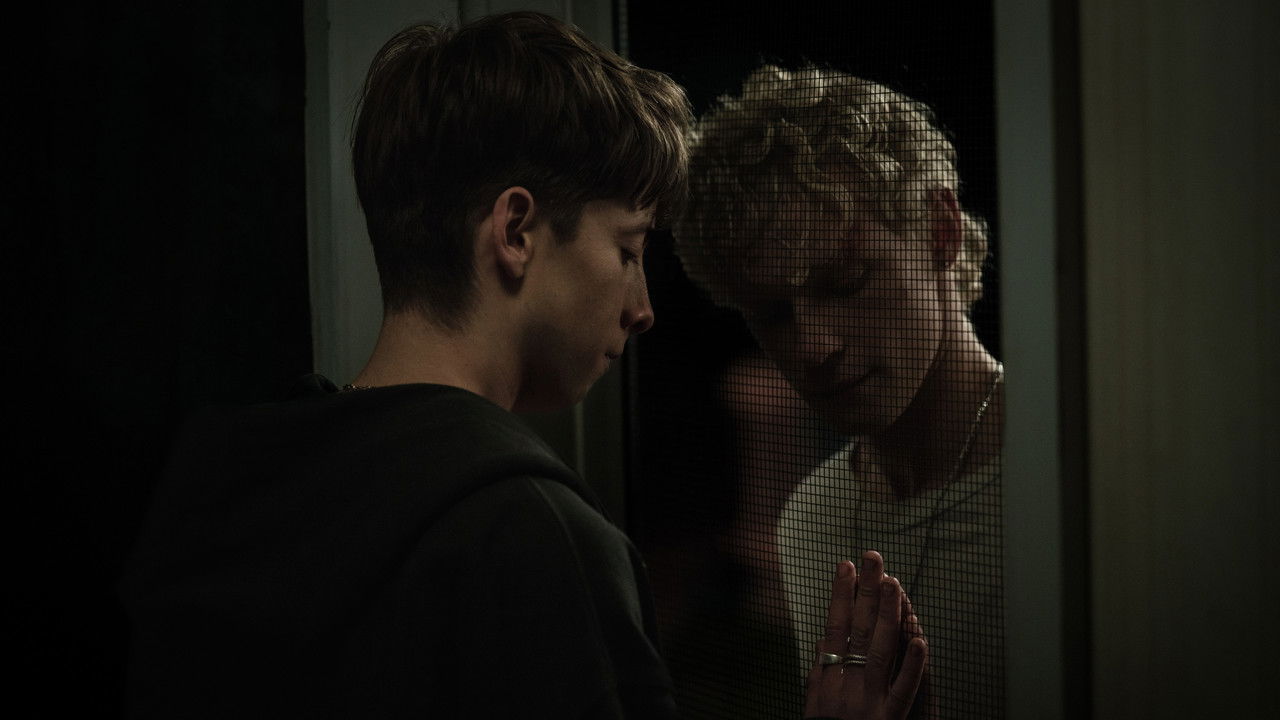
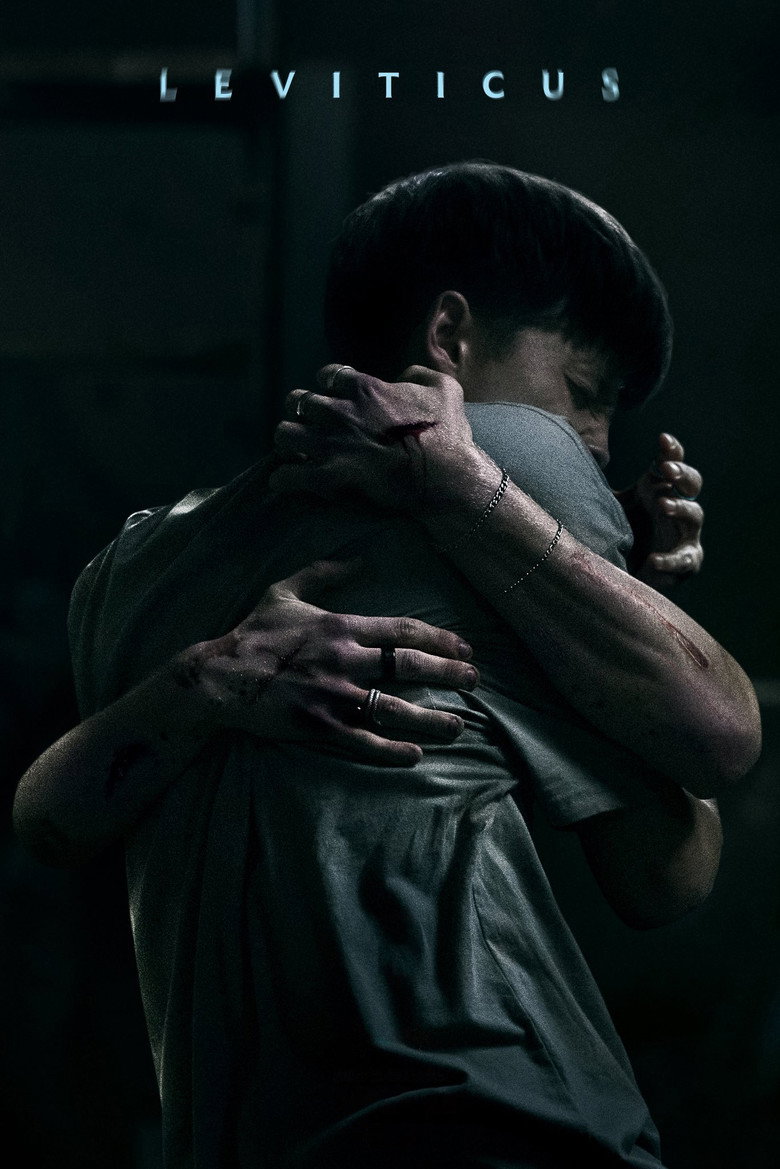
Naim finally traps the creature that has spent the film appearing as Ryan, sealing it inside a burning building after a long night where he can't always tell whether he is fighting the demon or the real boy. Afterward his mother Arlene admits the truth: she went to the healer knowing it would attach a demon to him, convinced that making him afraid of being gay would keep him safe from bullies and worse. There is no apology that undoes it and no last-minute change of heart, and Naim leaves while she calls after him.
He meets Ryan, who also survived, at a bus stop. They board together, share a pair of headphones, and listen to Frank Ocean's "Self Control" while Naim rests his head on Ryan's shoulder. Then, as the bus pulls away, he sees another Ryan standing at the roadside. The entity is still there, and it appears to be following them.
That is the point of the ending. The demon was born out of the "deliverance" meant to cure Naim and out of his feelings for Ryan, so escaping the town does not kill it. Writer-director Adrian Chiarella has said he wanted the boys to choose love and hope instead of fear, even with the monster still loose. The closing image holds both ideas at once: the two of them are getting out together, and what was done to them is still following.
Reviews
blessedmaker◆Curator
Overall7.5Fear3Atmos.6.9Gore3
I think Leviticus is a gay romance drama first, and a horror film secondary. That's not necessarily a bad thing, depending on what you came looking for. You could replace the horror elements with a more common tension engine and I think you would still have a very good film, just not a horror film.
The horror works, but it works as support. It's a new take on how religion and a still-homophobic society treat being gay as unnatural, as a sin, and the film delivers that judgment as a supernatural entity. The romance stays center stage: the love, the curiosity, the anger, all of it human emotion. The horror takes a back seat, used mostly to set up scenes where Naim has to push his feelings down, lest he give in to the "evilness" of his own desire.
I won't go into the details of the plot, as that's something you can google. Instead, I'll talk about what stood out to me. Joe Bird (Naim) and Stacy Clausen (Ryan) were perfect in their roles opposite each other. The romance worked. It wasn't forced or awkward, and felt natural. The kissing, and one implied sexual scene (nothing explicit shown) that runs a little long, will turn some crowds off, but none of it bothered me, and I don't think it detracted from the film. The chemistry and acting between the two anchored the film and really made me view things from their lens: pain, ecstasy, lust, fear, shame, anger.
Cinematography was well done, and the score from Jed Kurzel (The Babadook) does just as much of the work. A few shots stuck with me. One follows behind Naim and Ryan walking their bikes towards the industrial heart of their small town as his score swells beneath them, heavy and rhythmic. It's as if they're inevitably walking into darkness. Another has Bird riding his bike with the town blurred in the background, showing the hustle and bustle of everyday life as he tries to escape it; the next shot, he's at an abandoned building to meet the other.
As a debut from writer-director Adrian Chiarella, I really do think he's crafted a good film. It may not have been the film I was looking for, but I'm glad I saw it. I'll watch what he puts out next.