Metadata and artwork from TMDB. Not endorsed or certified by TMDB.
meta
1994 · R · 1h 52m
This time the terror doesn't stop at the screen.
It's wearing a new face.
Actress Heather Langenkamp — known to horror fans as Nancy from the original A Nightmare on Elm Street — begins receiving threatening calls and having disturbing visions as the franchise's tenth anniversary approaches. Her young son starts displaying signs of something dark invading his sleep, and the boundary between Heather's real life and the films she made starts eroding in ways she can no longer explain away.
Tags
Based on 1 rating
7.2
Overall
The film opens as if we're watching production on a new Elm Street sequel. Special-effects technicians are building a sleeker, more organic Freddy glove when the mechanical arm goes rogue, slashing crew members. Actress Heather Langenkamp — playing herself — watches in horror before waking up next to her husband Chase, a special-effects tech. It was a nightmare. Then they notice Chase's hand is cut in the exact spot where the glove struck the tech in her dream, and a real earthquake shakes Los Angeles at the same moment. The film refuses to let reality and nightmare settle into separate categories.
Heather lives with Chase and their young son Dylan in Los Angeles. Dylan has been talking quietly to people no one else can see, and Heather has started receiving creepy phone calls — someone disguising their voice as Freddy, reciting the old rhyme. As the Elm Street franchise's tenth anniversary draws attention, New Line Cinema calls her in. Producer Bob Shaye tells her Wes Craven is writing a new script and wants her to reprise Nancy one last time. Heather declines. Dylan, meanwhile, is deteriorating: refusing to sleep in his bed, clutching his stuffed dinosaur Rex as a ward against something, muttering about a man with claws trying to get through his sheets.
Chase is working an out-of-town effects job when exhaustion catches up to him on a night highway. He falls asleep at the wheel. In the dream, Freddy's clawed hand tears through the seat and slashes him. In reality, the car veers off the road and flips. When Heather sees the claw-pattern cuts on Chase's body at the hospital, she understands: whatever Freddy is now, it has crossed a line into her actual life.
At the funeral, Dylan has a violent episode — screaming, seeing Freddy inside the coffin reaching for Chase. Heather's former co-star John Saxon comforts her in the parking lot afterward, but something is slightly off. He keeps calling her Nancy. He speaks in the exact register of his character Lieutenant Thompson from the original film. The membrane between John Saxon the actor and the father he played is beginning to thin.
Heather visits Wes Craven at his home, where he sits haunted in front of a screenplay in progress. He explains the situation plainly: for ten years, the Elm Street films unknowingly imprisoned an ancient, shapeshifting entity — a primal evil that inhabits stories. When Freddy's Dead ended the franchise, the entity was released. It has settled on Freddy as its preferred form, the shape it wears best, and it is now pushing toward full entry into the real world. To complete the crossing, it needs to destroy Heather — the original Nancy, the gatekeeper who first confronted it. The only way to re-trap it is for Heather to play Nancy one last time, for real, and face it directly. As she listens, she glances at his screenplay and realizes it is describing her own life — events she is currently living, dialogue she just spoke.
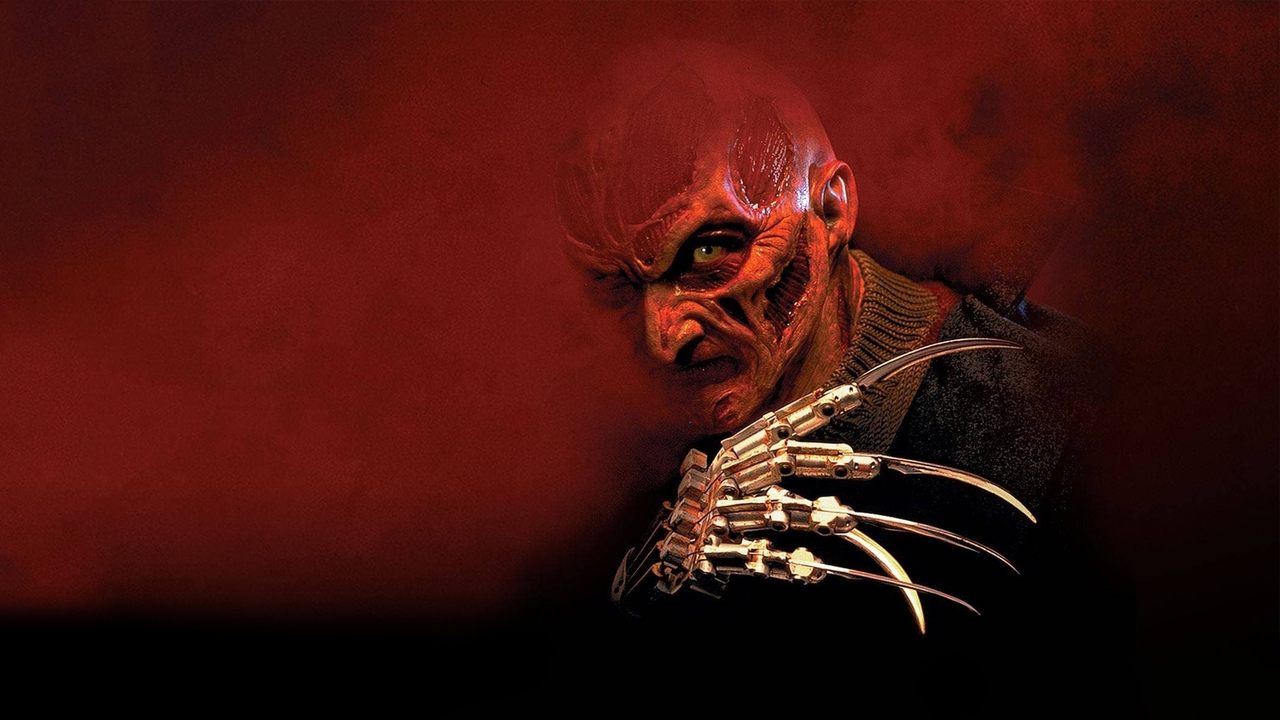
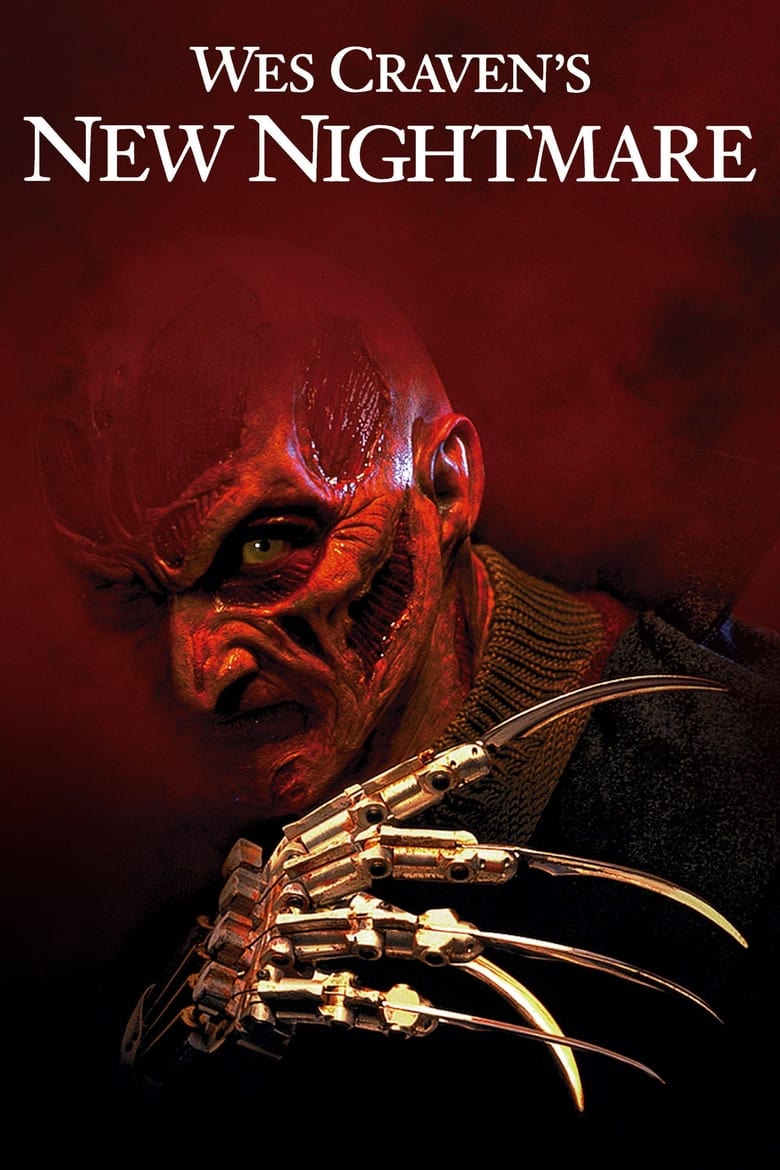
Heather tries to reach Robert Englund, the actor behind the Freddy makeup. He is initially warm but admits he has been painting unsettling, more monstrous Freddy images and that the dreams have been getting worse. Then he disappears entirely — calls go unanswered, no one can locate him. The Freddy that stalks Heather's visions and Dylan's sleep is not the quipping pop-culture icon of the later sequels. This version is darker and more feral: organic glove blades that seem to grow from the arm, minimal speech, no jokes. The entity has stripped the cartoon excess away and left something older underneath.
Dylan's state continues to collapse. He speaks in Freddy's rhyme in a voice that is not his own. After a seizure-like episode, doctors insist he be admitted for sleep monitoring, diagnosing possible psychosis. The hospital sedates him and hooks him to equipment, dismissing Heather's explanations as delusion. In the ward, Dylan is sedated and therefore sleeping — exactly what Freddy needs. Freddy attacks him through the forced sleep, triggering another episode. Dylan tells Heather in a trance that Freddy is calling him to the freeway, the same stretch of road where his father died.
Heather breaks Dylan out of the hospital during a chaotic night sequence. Dylan flees in a trance, walking directly into freeway traffic — crossing multiple lanes of oncoming cars in a dreamlike procession without being touched. Heather chases him home on foot. When she arrives, John Saxon is waiting outside, and he calls her Nancy without hesitation. She looks down and she is wearing Nancy's clothes from 1984 — the blue pajamas and robe. The real world has finished sliding. The entity has pulled her into a merged narrative, and there is no longer a meaningful distinction between Heather Langenkamp and the character she played.
Inside, Dylan has already climbed into his bed. When Heather follows, the sheets and mattress open like a mouth and swallow her into darkness. She falls into a hellish domain: stone corridors, organic tunnels, a vast furnace at the center. The production design makes the fairy-tale subtext explicit — earlier in the film, Heather read Hansel and Gretel to Dylan as a bedtime story, and now they are inside it. Freddy is the witch. The furnace is the oven. Dylan is held in an alcove, Freddy's elongated tongue wrapped around him, trying to pull him in and consume him.
Heather fights her way through the labyrinth to reach her son. In the climax, Dylan manages to grab a kitchen knife Heather carried in from the real world and drive it through Freddy's tongue, forcing it to recoil. Together they turn the trap on its owner: they lure Freddy into the furnace and ignite it. He burns, his true demonic form briefly visible in the flames. As the hellscape dissolves around them, Heather and Dylan pull a blanket over themselves and come through into Dylan's bedroom — awake, intact, the house quiet.
On the floor beside the bed is Wes Craven's completed screenplay. Inside the cover is a handwritten note thanking Heather for playing Nancy one last time and for helping re-imprison the entity in the only place it can safely exist: inside a story. Heather begins reading the script aloud to Dylan as a bedtime story. He calms and drifts off to sleep, finally, without fear. The film closes on the suggestion that the ancient demon is once again contained in fiction — and that it will stay there only as long as someone keeps telling the story.
More Like This
Reviews
No reviews yet. Be the first.