Metadata and artwork from TMDB. Not endorsed or certified by TMDB.
survival
2025 · R · 1h 55m
Time didn't heal anything.
Memento mori.
Twenty-eight years after the Rage Virus, the British Isles remain quarantined and largely dead while Europe has moved on. On Lindisfarne, a small island community survives on dangerous mainland scavenging runs. When twelve-year-old Spike decides his sick mother can't wait for his cowardly father to act, he steals a boat and takes her to the ruined mainland to find a doctor who might save her. 28 Years Later is a road movie through a broken Britain — intimate, grief-soaked, and more interested in the living than the dead.
Tags
Based on 3 ratings
7.4
Overall
Scotland, 2002. A boy named Jimmy flees his infected family home and runs to the church where his father preaches. He finds no safety there — only his father in ecstatic rapture, declaring the outbreak the hand of God, the world finally being cleansed. This is the seed of the man Jimmy will become.
Lindisfarne, 28 years on. The Holy Island off Northumberland is one of the few functioning communities left in Britain — protected by a causeway that floods with the tide, held together by rules and routine. Scavenger Jamie makes mainland runs for supplies and tells the stories afterward bigger than they were. His wife Isla is losing herself to a progressive neurological illness. Their twelve-year-old son Spike is watching both of them and drawing conclusions. When Jamie takes Spike on a run and later lies to cover Spike's poor performance, something between them breaks. Spike overhears that a doctor on the mainland may know how to help Isla. Jamie does nothing. Spike steals a boat.
On the mainland, Spike and his increasingly confused mother navigate overgrown roads and Infected hot zones until they fall in with Erik — a Scandinavian sailor stranded when his Navy crew was killed, capable and scarred and everything Spike's father isn't. Erik reluctantly guides them inland. His bravery turns out to be inseparable from bitterness; he was abandoned by command and left to die, and he carries it. Spike's hero worship survives the revelation but comes out crooked.
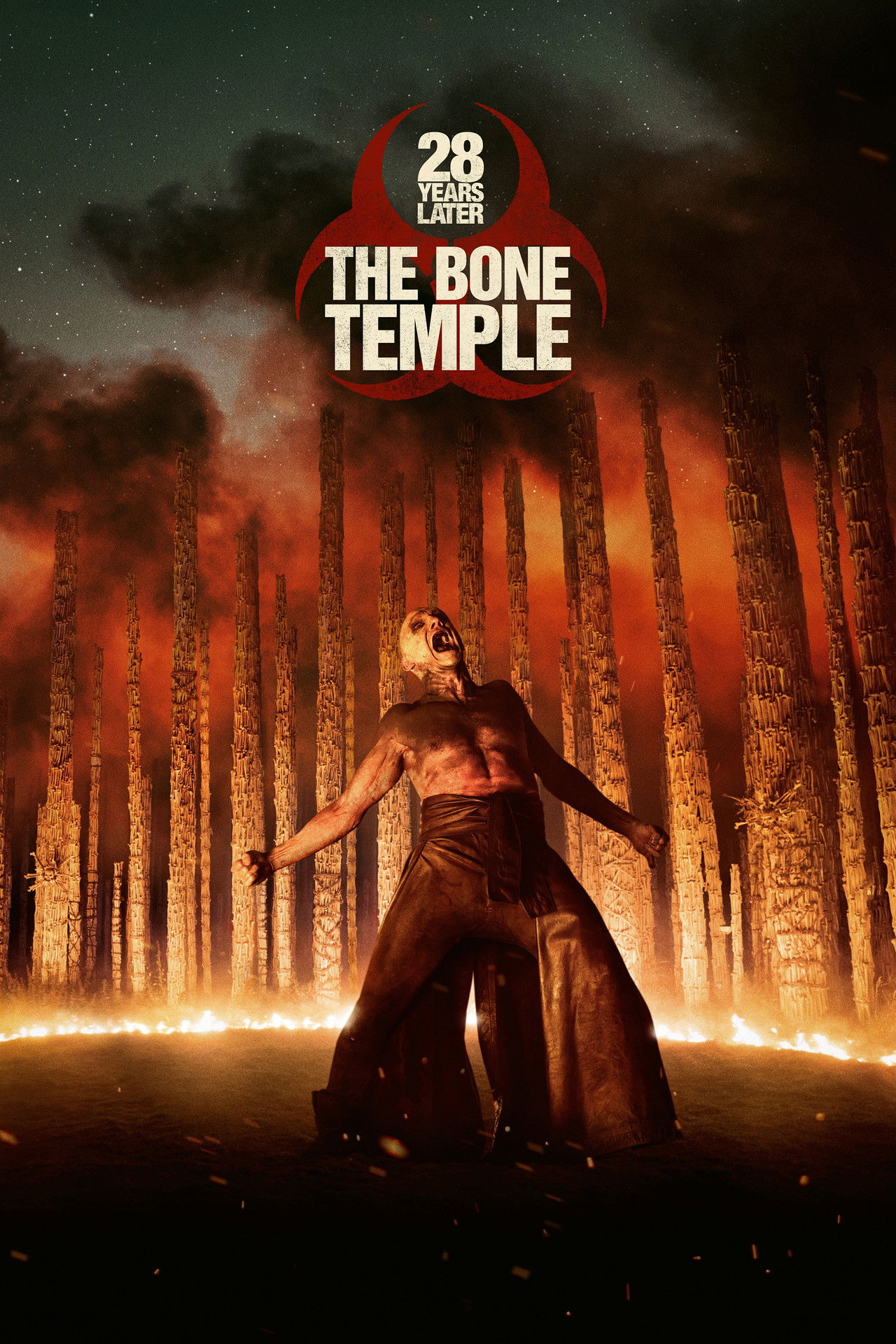
In the ruins of rural Britain, the group encounters a pregnant Infected woman. She gives birth. The baby is healthy, clean, untouched by the virus — proof that the Rage does not necessarily pass to the unborn. The infant brings them to Dr. Ian Kelson, a brilliant and possibly unhinged doctor living alone, cremating the dead and weaving their ashes into vast memorial structures. Kelson takes Isla's condition seriously in a way Jamie never did. He becomes the moral centre of Spike's journey — a man who refuses to let the dead be forgotten and believes the living might still be saved.
Isla deteriorates. The mainland offers no real shelter from the pace of movement, fear, and lost days. Jamie, who has followed or caught up with them, tries to dismiss Kelson as a madman. Spike increasingly sides with Kelson. None of it is enough. Isla dies — not spectacularly, not at the claws of the Infected, but quietly and wrenchingly, somewhere far from home. Spike blames his father for the years of avoidance that brought them here. He blames himself for the rest.
Kelson tells Spike that the baby is a responsibility the living still owe the dead. Spike takes the infant back to Lindisfarne, leaves her at the house with a note for Jamie: her name is Isla. He tells his father he is going back to the mainland. He does not say when he'll return. He leaves. The island, and everything it means — safety, stagnation, his father's version of survival — recedes behind him.
Twenty-eight days later, Spike is on the mainland alone when a pack of Infected nearly overruns him. A convoy arrives and cuts them down. The group is theatrical, uniformed, strange — every member wearing the same wig, answering to the same name. Their leader is charismatic and calls himself Sir Lord Jimmy Crystal. Spike is too exhausted to understand what he's walking into. He gets in.
More Like This
Reviews