

Metadata and artwork from TMDB. Not endorsed or certified by TMDB.
body-horror
2026 · R · 2h 13m
Some things are meant to stay buried.
What lies entombed, should stay entombed.. sometimes grief of a loved one is better than.. this..
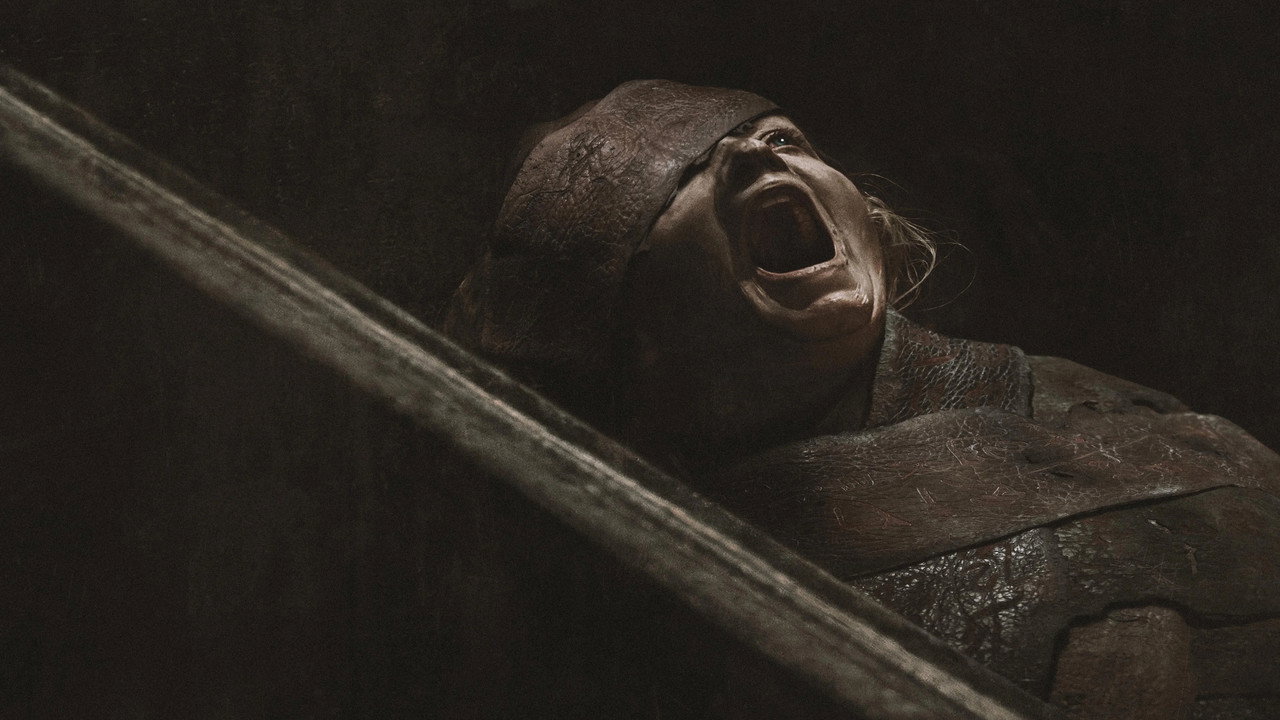
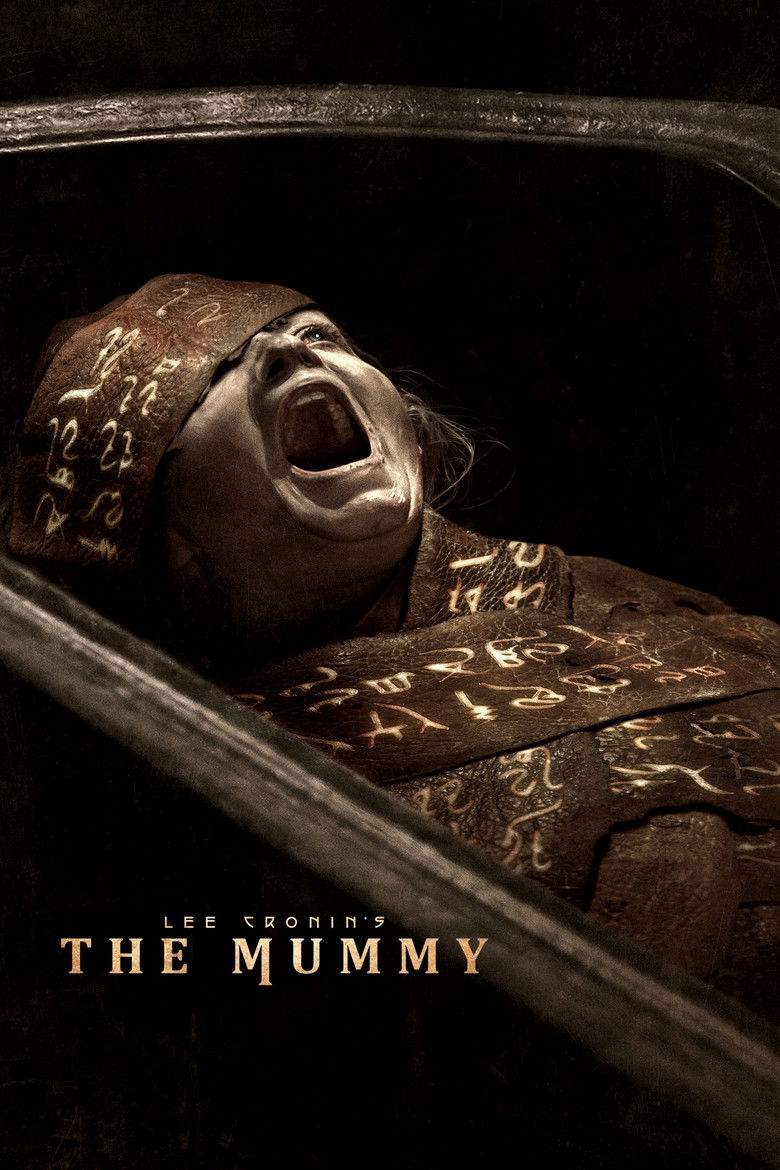
An American journalist's daughter vanishes in Egypt and returns eight years later preserved inside an ancient black sarcophagus — seemingly alive but wrapped in cursed inscriptions that are the only thing keeping an ancient demon sealed inside her.
Tags
Based on 2 ratings
7.4
Overall
The film opens in Aswan, where a local family's house is built over a mostly-buried black pyramid. The parents descend into a cellar connecting to the structure and approach a black basalt sarcophagus containing a wrapped mummy; they’re relieved that “it isn’t time yet,” but then the mummy twitches and an unseen force kills the father while the mother watches in horror. American TV journalist Charlie Cannon lives in Cairo with his pregnant wife Larissa and their kids Katie and Sebastián. One morning, Katie is approached at their compound fence by that same Aswan woman, the Magician, who lures Katie out with candy; a sandstorm blows in and Charlie chases them but loses his daughter. Police treat Charlie and Larissa as potential suspects, assigning junior detective Dalia Zaki as liaison. Katie is never found. The case grows cold and the family is shattered. Eight years pass. Charlie and Larissa are still together but hollowed out, raising Sebastián and a younger daughter Maud, living under the shadow of that absence. In the desert near Aswan, a teenager witnesses a cargo plane crash whose wreck reveals the same black basalt sarcophagus. Archaeologists open it despite obvious red flags: inside is a mummified child — Katie Cannon — wrapped head-to-toe in ancient parchment covered with strange inscriptions. The US embassy calls Charlie and Larissa: their daughter has been found. Katie looks like a desiccated, partially rehydrated mummy; the wrappings are parchment inscribed with a forgotten language that reads more like a containment spell than funerary text; Egyptian authorities insist she has a heartbeat and some brain activity, as if she’s been in a suspended cursed state. Katie is transported home, installed in a darkened bedroom, barely talking. Charlie investigates the writing on the wrappings and meets an Egyptologist who explains the text references a demon called the Nasmaranian — something ancient meant to be contained, not resurrected. The inscriptions describe a “living sarcophagus”: a host body wrapped and spiritually sealed to imprison the entity. The archaeologists’ plane crash was caused by supernatural interference — the Nasmaranian orchestrated its own release. The more wrappings that are loosened, the stronger the entity grows. Katie alternates between childlike confusion and cold adult observations that don’t sound like her; she sometimes speaks in unknown languages and claims not to remember. Sebastián wakes with headaches and nosebleeds, seeing flashes of the black pyramid in dreams. Maud has violent impulses at school as if compelled. Black scarab-like beetles and scorpions begin appearing around the house. In one horrifying scene, Katie vomits a live scorpion into detective Zaki’s mouth; it crawls down her throat and bursts out through the side of her neck. The Nasmaranian attacks trust as much as flesh — it whispers through Katie to stir suspicion between Charlie and Larissa and uses emotional fractures as pathways into the other children. Zaki, still obsessed with the original case, tracks down the Magician in prison and, with Larissa, confronts her and her now-teenage daughter Layla. The Magician explains that a small cult surrounding the black pyramid believed the Nasmaranian could grant resurrection-adjacent gifts, but their true rituals were containment: kidnapping Katie was a desperate attempt to bind the demon in a pure host and keep it away from the pyramid’s excavation. The archaeologists opening and shipping the sarcophagus inadvertently broke that containment. As more wrappings come off at home, Katie’s body heals in grotesque increments — muscles filling out, eyes clearing, black veins pulsing under her skin — and she begins exhibiting telekinesis, direct mental control over the other children, and spontaneous poltergeist activity. Carmen, Larissa’s mother on life support, suddenly wakes up and attacks the family, half-alive and half-puppet of the demon. Sebastián, under psychic influence, swings a baseball bat at Larissa; the living room becomes a battleground of possessed children and a reanimated grandmother. Zaki, wounded but still moving, arrives and fights long enough to get Charlie alone and reveal everything she has learned. Charlie realizes the only way to protect his family is to accept the demon into himself. The cult’s recovered parchment includes a transfer incantation that moves the Nasmaranian from one host to another provided the new host consents and a binding circle is prepared. Zaki, bleeding and barely standing, begins the chant while Katie convulses; black tar-like substance pours out of Katie’s mouth and moves into Charlie, who screams as the entity takes hold. Katie collapses, wrappings slack around her, suddenly herself again — traumatized but freed. Charlie has a few lucid moments with Larissa and the kids to say goodbye and reassure Katie that none of this was her fault. He is then secured in a coffin-like box in the basement, a new black sarcophagus marked with protective symbols. Katie, now visibly healing but covered in scars, visits the box and taps on its surface; Charlie taps back in Morse code, spelling out I love you — though the film leaves it deliberately ambiguous whether it is always Charlie tapping or the demon mimicking him. In the prison epilogue, Zaki and Larissa perform another spell in the Magician’s cell, transferring the Nasmaranian from Charlie’s contained body into the Magician as a new host. A post-credits tag shows Charlie wheeled in wrapped up as the new mummy, suggesting the transfer may be incomplete or that containment requires both vessels, leaving the cycle open. The final tone is that the Nasmaranian is safely contained for now, but the cost is enormous: multiple deaths, a permanently altered family, and at least one living conscious person trapped as a walking sarcophagus. The film reimagines the mummy myth as a cycle of familial sacrifice and weaponized grief rather than tomb-raiding adventure.
More Like This
Reviews
No reviews yet. Be the first.